The Most Overlooked Tool in Crypto
When most people think about crypto, they think about coins going up or down in price. What often gets missed is what these assets can actually do once you hold them.
If we go back to the beginning, cryptocurrencies are not random digital tokens. They are assets that live on blockchains and can be used inside entirely new financial systems.
This is where decentralised finance comes in.
Decentralised finance, often called DeFi, is a financial system built on blockchains rather than bank ledgers. Instead of relying on banks, brokers, or clearing houses, transactions are executed by smart contracts that follow predefined rules.
The function is familiar. The structure is not.
In DeFi, you can lend money, borrow money, earn interest, and provide liquidity, just like in a traditional bank. The difference is transparency, efficiency, and access.
Everything happens on public blockchains. You can see how much collateral is posted. You can see how yields are generated. And you are not dependent on a single institution’s balance sheet or decision making.
For investors, this opens up interesting possibilities.
Many cryptocurrencies can be staked or lent to earn a yield. For assets like Bitcoin or Ethereum, this typically results in annual yields of around 2% to 5%.
This yield comes on top of any potential price appreciation. It is not an either or decision.
But even more interesting still are stablecoins.
Stablecoins are cryptocurrencies that are pegged 1 to 1 to fiat currencies such as the USD or EUR. Their purpose is not price appreciation, but stability and usability.
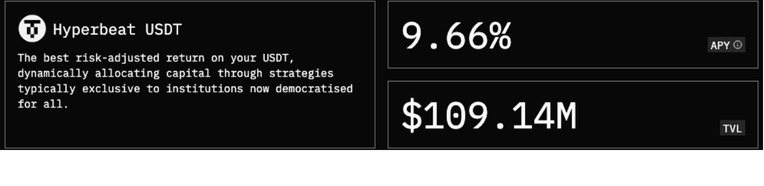
Inside decentralised finance, stablecoins can be lent in fully collateralised markets to earn yields of up to 10% per year. These returns significantly outperform traditional savings accounts and many bond products.
What makes this particularly attractive is flexibility.
Stablecoins can be deployed quickly. They can be withdrawn quickly. And they are not locked into long maturities.
For a crypto investor, this creates a powerful tool.
Stablecoins allow you to park capital after taking profits from Bitcoin or altcoins. Instead of sitting in cash earning close to nothing, that capital can earn yield while remaining liquid.
At the same time, stablecoins keep you ready.
When markets correct or crash, capital is already positioned inside the crypto ecosystem and can be redeployed quickly into assets at discounted prices.
This ability to move between growth and defence without leaving the system is one of the most underappreciated advantages of crypto.
Of course, this is not without challenges.
Decentralised finance introduces additional complexity. Wallets, protocols, and smart contracts require a basic level of understanding. For many investors, this learning curve is what prevents them from participating at all.
There are also real risks.
Not all protocols are well designed. Some take unnecessary risks. Others are outright scams.
This is why selectivity is critical.
A narrow selection of battle tested protocols, conservative parameters, and clear rules dramatically reduce risk. With the right approach, decentralised finance does not need to be complicated.
It needs to be structured.
For serious crypto investors, stablecoin lending is not an optional feature. It is a core tool.
It provides yield. It provides flexibility. And it creates a way to manage volatility without exiting the asset class entirely.
Used correctly, decentralised finance turns crypto from a purely speculative investment into a more complete financial system. Inside Beyond the Market, this is handled through a vetted and continuously monitored selection of conservative lending options inside the Vault Tracker, so investors can earn yield without having to research or evaluate every protocol themselves.
This is why stablecoins and DeFi deserve a place in any well thought out crypto strategy.